
Agencies
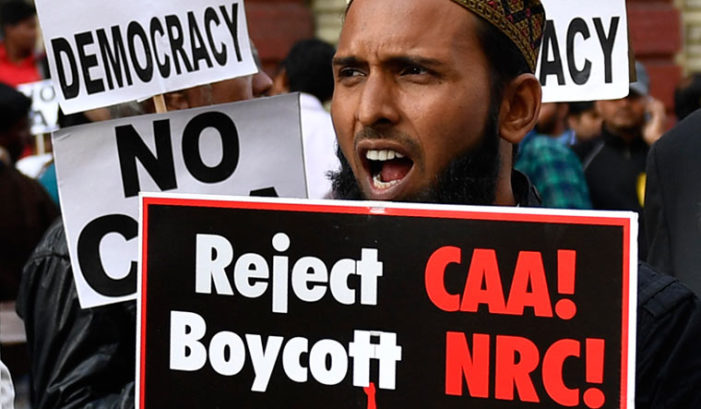
The Office of the United Nations High Commissioner for Human Rights on Tuesday moved an intervention plea in the Supreme Court on the Citizenship (Amendment) Act.
According to reports, the OHCHR informed India’s permanent UN mission in Geneva about the move on Monday.
Raveesh Kumar, the official spokesperson of the ministry of external affairs, responded to the UN body’s move.
“Our Permanent Mission in Geneva was informed yesterday evening by UN High Commissioner for Human Rights (Michelle Bachelet) that her office had filed an intervention application in the Supreme Court of India in respect to the 2019 Citizenship Amendment Act,” Kumar said.
“We strongly believe that no foreign party has any locus standi on issues pertaining to India’s sovereignty,” he said. India is clear that the CAA is constitutionally valid and complies with all requirements of its constitutional values, Kumar said.
“It is reflective of our long standing national commitment in respect of human rights issues arising from the tragedy of the Partition of India,” he said. “India is a democratic country governed by the rule of law. We all have utmost respect for and full trust in our independent judiciary. We are confident that our sound and legally sustainable position will be vindicated by the Supreme Court,” he said.
Last week, UN High Commissioner for Human Rights Michelle Bachelet had expressed concern about the Citizenship (Amendment) Act and the violence in Delhi.
After the act had been passed in December, the OHCHR had described the legislation as being “fundamentally discriminatory in nature”.
In a statement, OHCHR, noted, “The amended law would appear to undermine the commitment to equality before the law enshrined in India’s constitution and India’s obligations under the International Covenant on Civil and Political Rights and the Convention for the Elimination of Racial Discrimination, to which Indian is a State party, which prohibit discrimination based on racial, ethnic or religious grounds.”

UN human rights body moves Supreme Court on CAA added by Muslim Kashmir on
View all posts by Muslim Kashmir →